AWS
AWS cloud provider supports the following DBMS:
Step 1. Configure an AWS cloud connection
In the Database Explorer (⌘ 1) , click
 New on the toolbar. Navigate to Data Source from Cloud Provider and select AWS.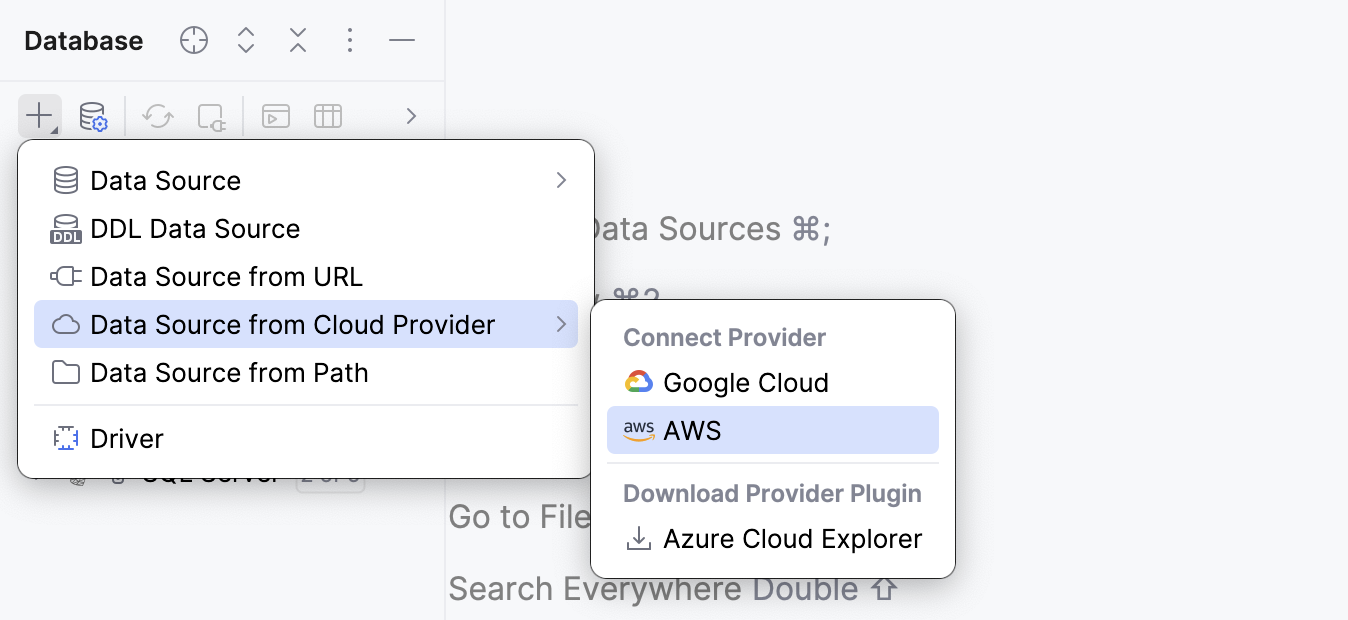
DataGrip opens the Clouds section on the left-hand side of Data Sources and Drivers dialog. Iin this section, enter your cloud provider account connection details on the Configuration tab of the settings area.
From the Regions dropdown, select the AWS Regions of the account that you are connecting to.
From the Authentication type dropdown, select the authentication method you want to use.
Default credential providers chain: use the credentials from the default provider chain. For more information about the chain, refer to Using the Default Credential Provider Chain.
Profile from credentials file: select a profile from your file.
Explicit access key and secret key: enter your credentials manually.
With the Default credential providers chain or Profile from credentials file option selected, you can click Open Credentials to locate the directory where the credential file is stored. If you use the default location, it's usually ~/.aws/credentials on Linux or macOS, or C:\Users\<USERNAME>\.aws\credentials on Windows. Or it can be your custom location if you have selected Use custom configs.
You can also set up Extended Connection Settings:
HTTP Proxy: select if you want to use IDE proxy settings or specify custom proxy settings.
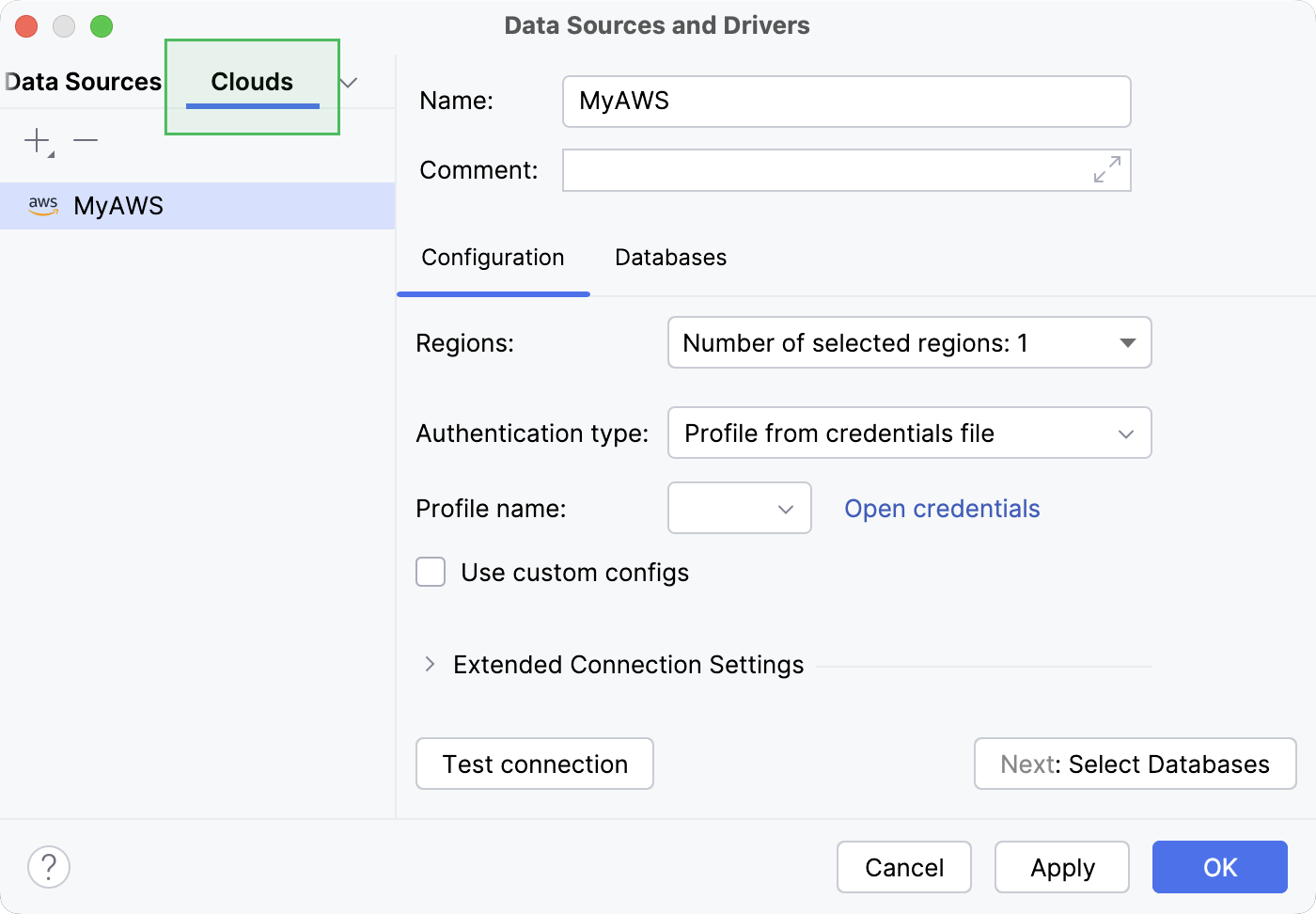
Run a test connection by clicking Test connection at the bottom of the connection details area.
Click Apply to save the connection configuration.
Step 2. Create a data source
To create a data source for a database stored in the cloud provider, do the following.
In the Clouds section on the left-hand side of the dialog of Data Sources and Drivers dialog, open the Databases tab of the settings area.
On the Databases tab, DataGrip displays the list of databases available in the account. Select the databases you want to connect to. To select multiple databases, click them holding Shift.
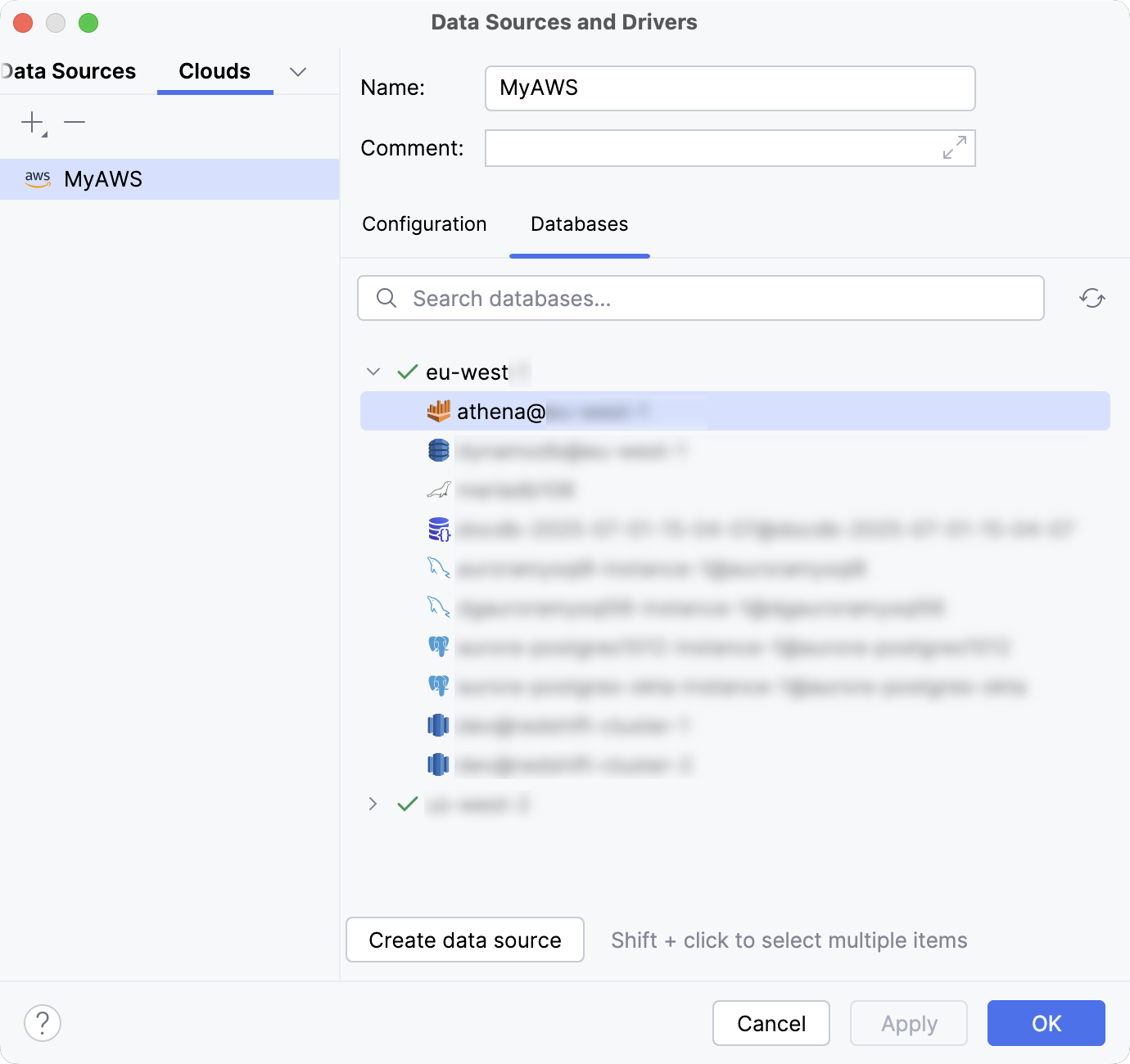
To create a data source for the selected database, click Create data source.
DataGrip saves the cloud provider connection configuration and opens the Data Sources section on the left-hand side of the dialog. The IDE also automatically fills the database connection details in the corresponding fields of the General tab of the settings area.
Type your user credentials.
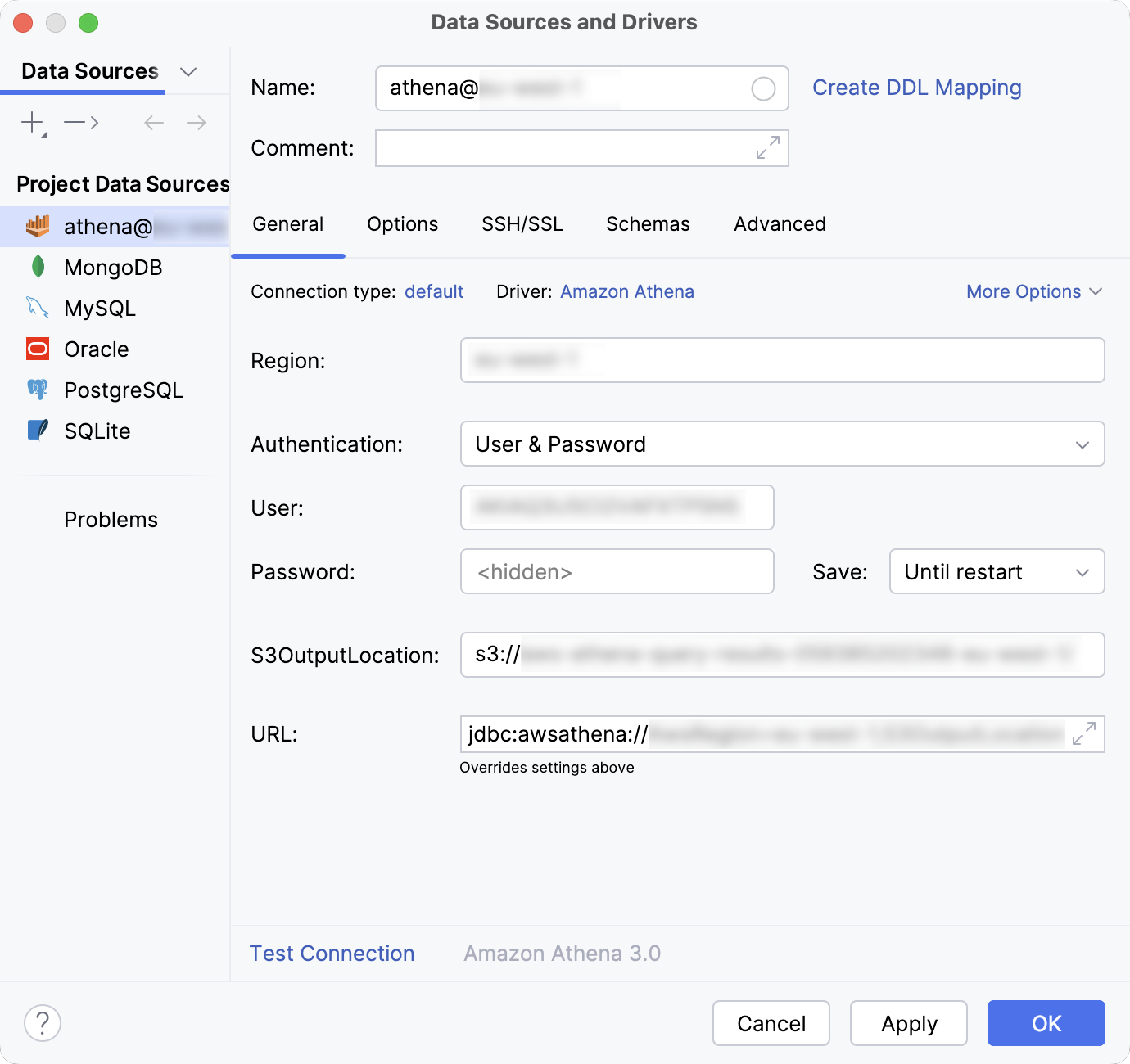
Ensure that the database connection can be established using the provided details. To do this, click the Test Connection link at the bottom of the connection details section.

If you encounter any connection issues, refer to the Cannot connect to a database page.
(Optional) By default, only the default schema is introspected and available to work with. If you also want to work with other schemas, in the Schemas tab, select them for the introspection.
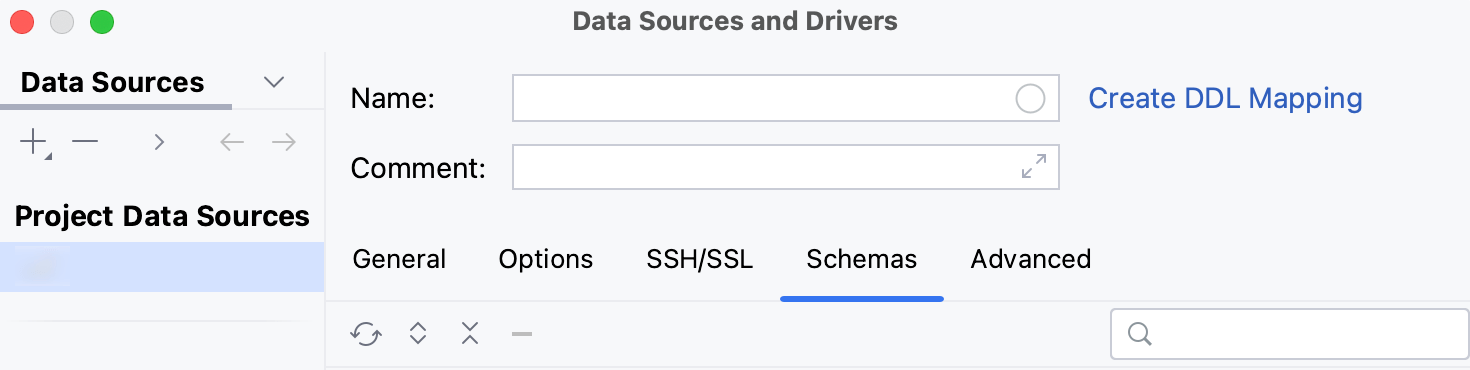
Click OK to create the data source.
Find your new data source in Database Explorer (⌘ 1) .
For more information about Database Explorer, see the corresponding reference topic.
For more information about working with database objects in DataGrip, refer to Database objects.
To write and run queries, open the default query console by clicking the data source and pressing F4.
To view and edit data of a database object, open Data editor and viewer by double-clicking the object.