Database object and file navigation
DataGrip provides tools and actions that let you quickly navigate to the database objects whose definition you are editing and locate and open your files.
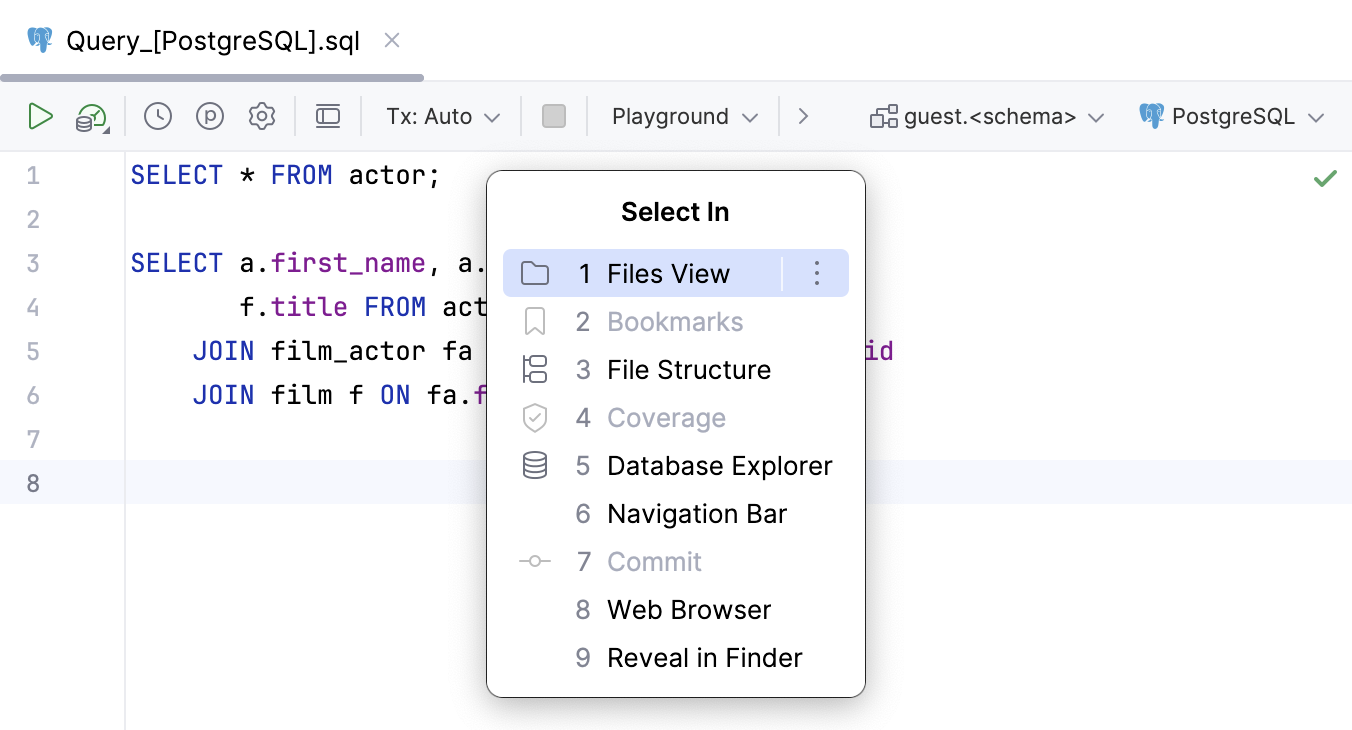
Navigate with the Select In popup
You can automatically locate a query console in the Files tool window.
If a query console is opened in the editor, place the caret at an empty area and press Alt+F1 to open the Select In popup.
In the popup, select Files View and press Enter. DataGrip locates your target in the Files tool window . To locate the data source this console is attached to in Database Explorer, select Database Explorer in the popup.
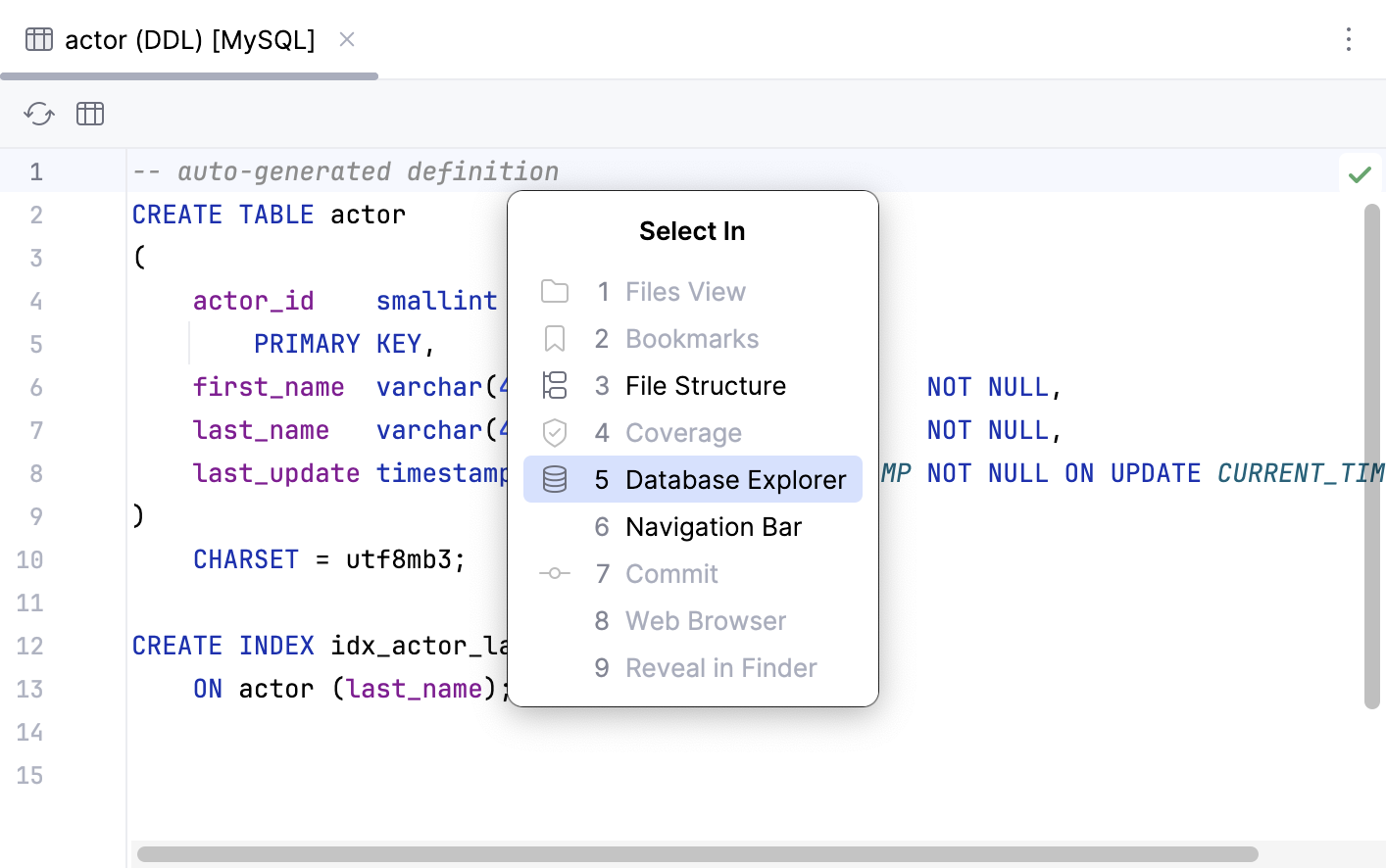
You can automatically locate a database object in the Database Explorer.
If a database object definition is opened in the editor, place the caret at an empty area and press Alt+F1 to open the Select In popup.
In the popup, select Database Explorer and press Enter. DataGrip locates your target in the Database Explorer.
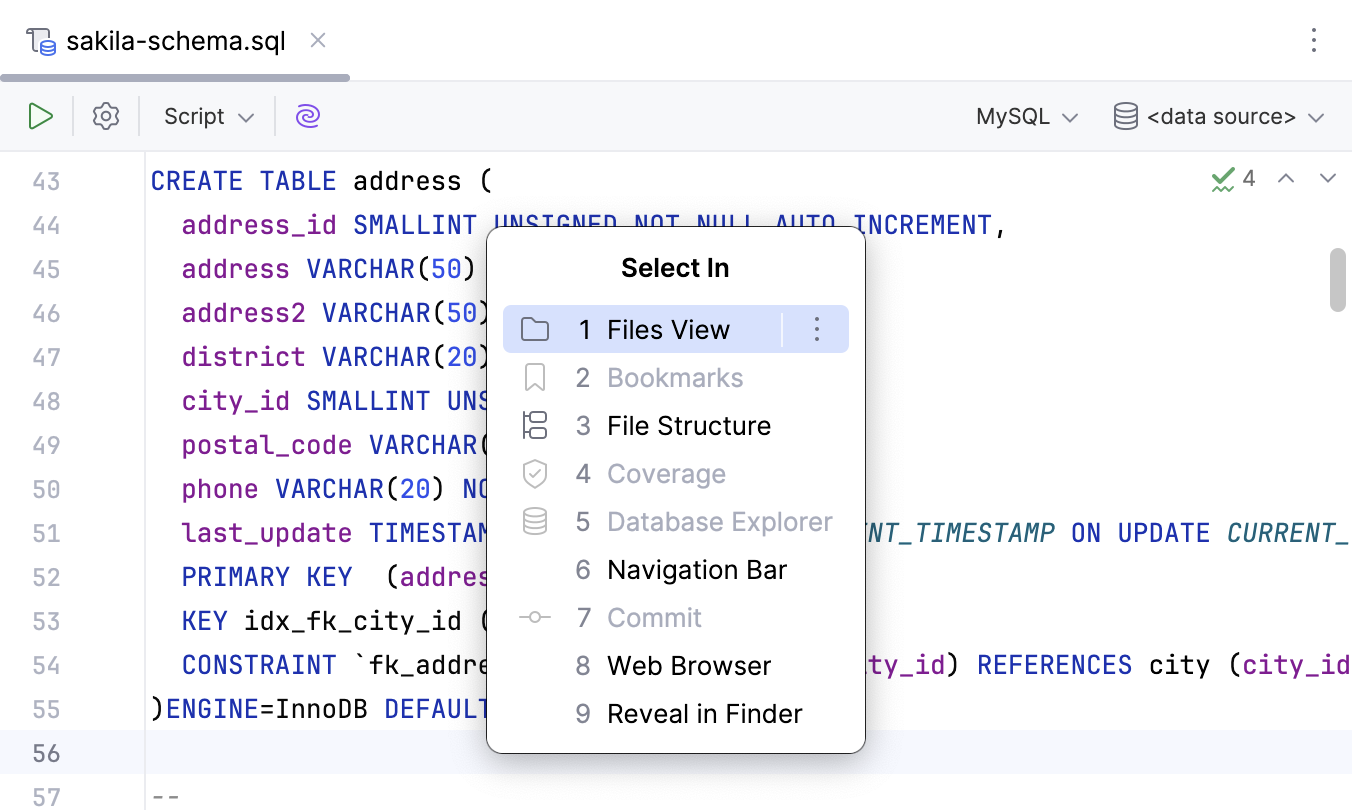
You can automatically locate a file in the Files tool window.
If a file is opened in the editor, place the caret at an empty area and press Alt+F1 to open the Select In popup.
In the popup, select Files View and press Enter. DataGrip locates your target in the Files tool window .
Navigate to a file with the Navigation bar
Use the Navigation bar as a handy tool to find your way across your databases and files.
Press Alt+Home to activate the Navigation bar.
Use the arrow keys or the mouse pointer to locate the desired database object or file.
Double-click the selected database object or file, or press Enter to open it in the editor.


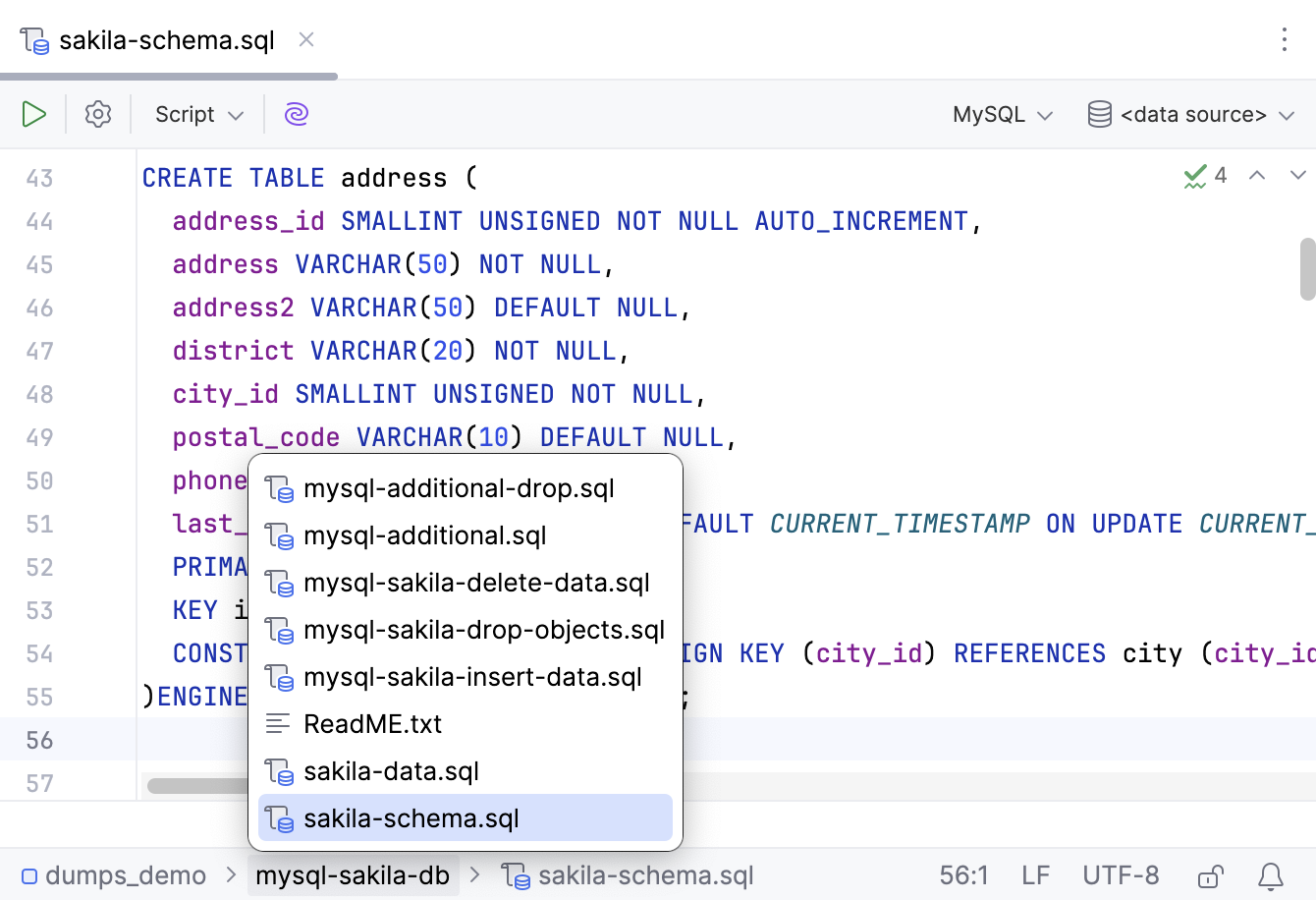
Browse a file path
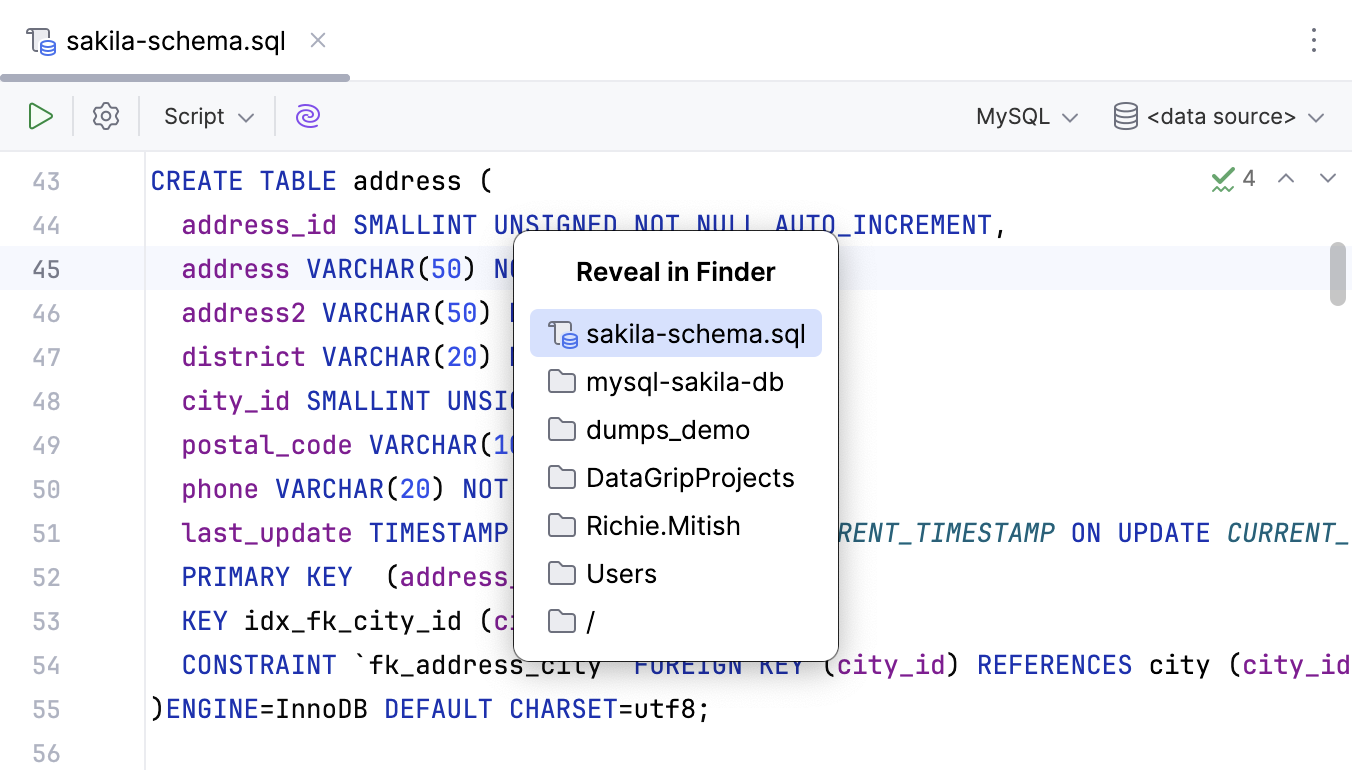
You can access any directory from the path to a file you are currently editing.
Press Ctrl+Alt+F12 or right-click anywhere in the editor and select from the context menu.
In the Reveal in Finder popup, select where to navigate and press Enter.