What’s New in GoLand 2025.2
GoLand 2025.2 introduces updates for working with HTTP servers, smarter inspections powered by
data flow analysis, and a new non-blocking
Welcome screen. This release also brings significant quality improvements to golangci-lint
support, including version 2, making the integration more robust for real-time code analysis.
Let’s take a closer look at what’s new.
Data flow analysis vs. nil
dereferences
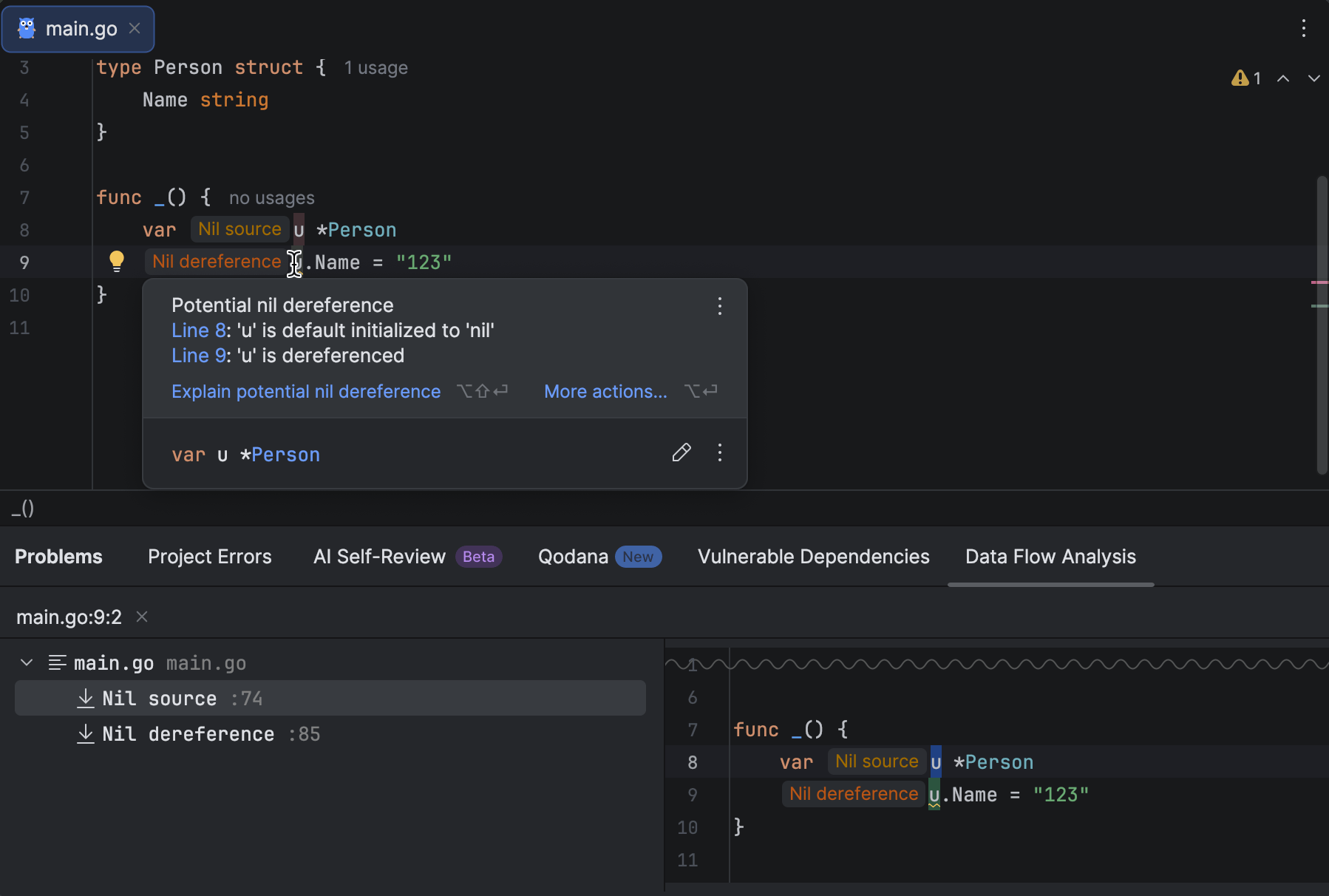
GoLand 2025.2 introduces interprocedural nil dereference analysis to help
you catch potential nil issues early, right in the editor and without
interrupting your workflow. This analysis understands how nil values can
flow through your code across function calls, files, and packages, helping you spot
unsafe pointer operations before they lead to errors.
You will see nullability hints for parameters in the quick documentation popup, warnings
for possible dereferences in the editor, and a dedicated Go Data flow analysis
tab in the Problems tool window that explains exactly how the nil
value flows through your code.
Non-blocking Welcome screen
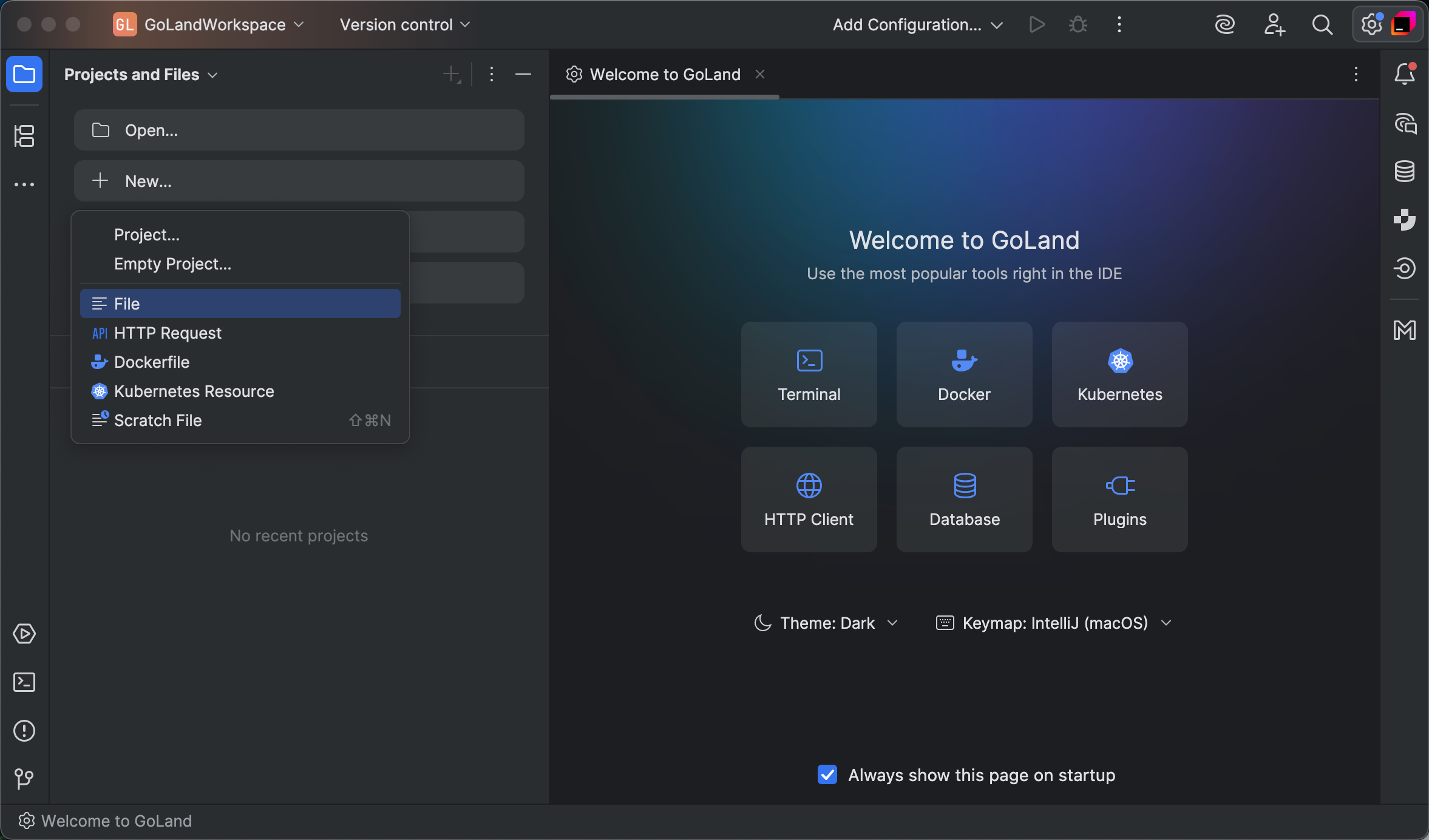
The Welcome screen now opens in a tab, letting you access tools like the terminal, Kubernetes, the HTTP client, Docker, and databases right away, without requiring you to open a project. You can also create and work with standalone files without opening a folder or setting up a project.
Smarter endpoint discovery and request generation
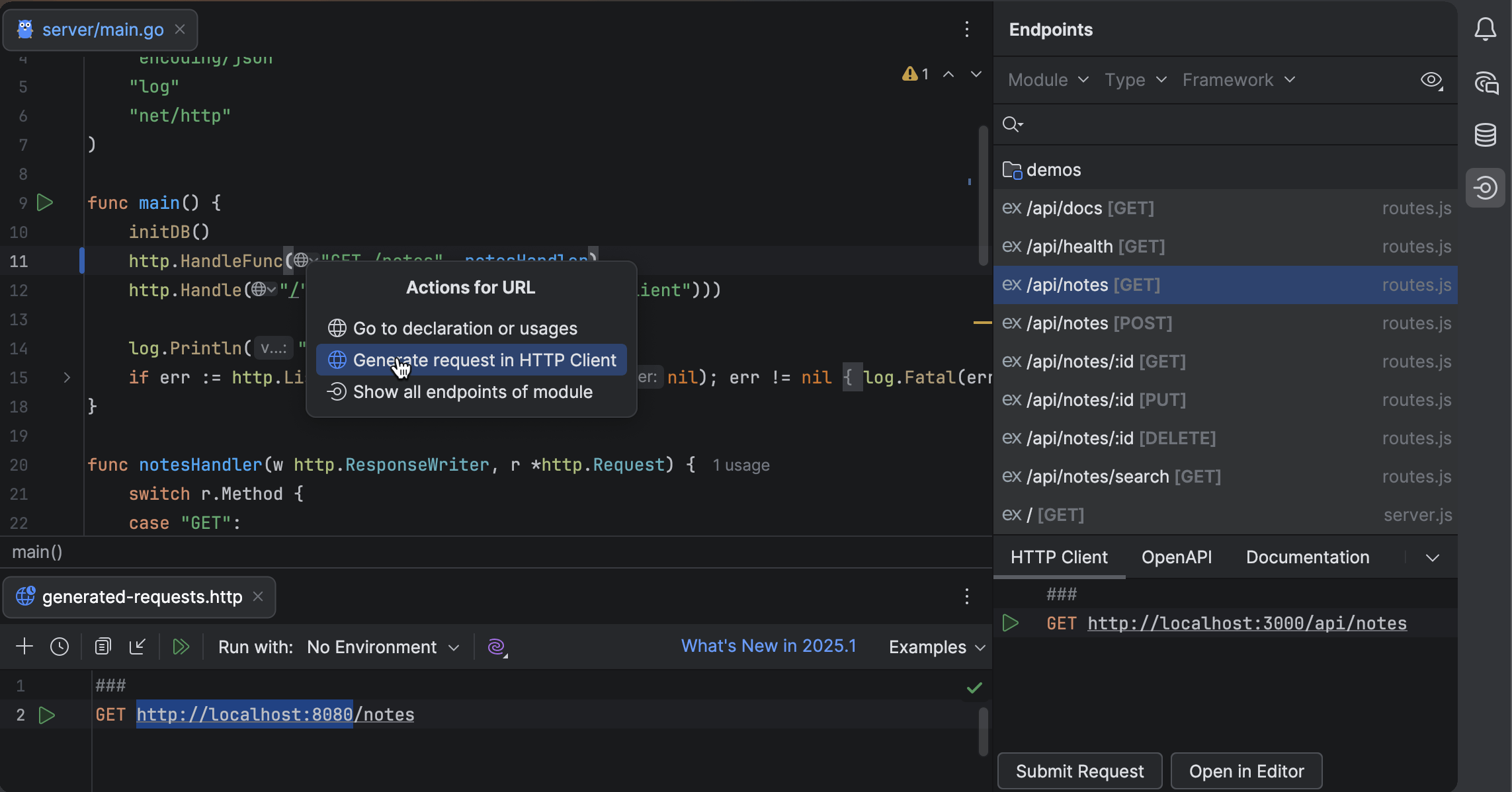
The Endpoints tool window now fully supports the new pattern syntax in net/http.ServeMux,
including method-based and wildcard routes like GET /task/{id}/. It also
displays HTTP methods next to each endpoint, making the list clearer and easier to work
with.
HTTP method detection and autocompletion have been improved to make generating requests
from endpoint declarations easier. This works with handlers defined using the standard
net/http package as well as Chi, Gin, and Gorilla. GoLand can now derive
the HTTP method from:
- Function names: (e.g.
r.GET("/path", handler)) - Method-prefixed patterns (e.g.
http.HandleFunc("POST /item", handler)) - Function arguments (e.g.
r.Method("DELETE", "/item", handler)) - Chained
.Methods(...)calls (e.g.r.HandleFunc("/item", handler).Methods("PUT"))
This update also includes authority resolution improvements for Gin and
http.Server, along with general refactoring to make the feature easier to
extend.
GoLand also inherits updates from IntelliJ IDEA, WebStorm, and DataGrip. Check them out!